
The Summer Solstice and the Inner Sun
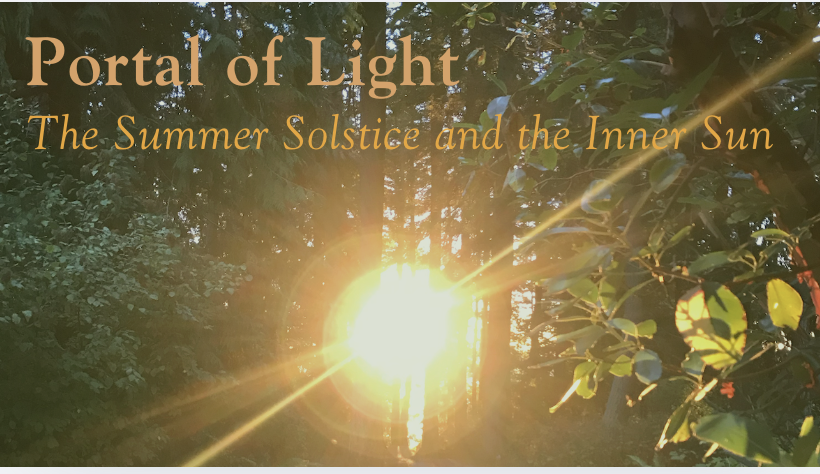
As spring yields to summer, we approach a threshold long associated with illumination, vitality, and awakening. Across cultures and throughout history, the Summer Solstice has been honored as a sacred turning point — a moment when light reaches its fullest expression and the earth itself seems suspended in radiance.
Yet the Solstice is more than a seasonal event. Psychologically and symbolically, it speaks to something profoundly human: the longing to encounter an inner source of vitality, meaning, coherence, and consciousness.
In exploring Summer Solstice traditions within my own ancestral heritage — particularly those rooted in Finland, Estonia, Poland, and Slovakia — I was struck by how many midsummer rituals centered around fire, light, dreams, fertility, protection, and humanity’s intimate relationship with the living world. Throughout Northern and Eastern Europe, fires were lit beneath the lingering twilight sky while songs, rituals, and folk customs honored the mysterious vitality of nature and the turning of the seasons.
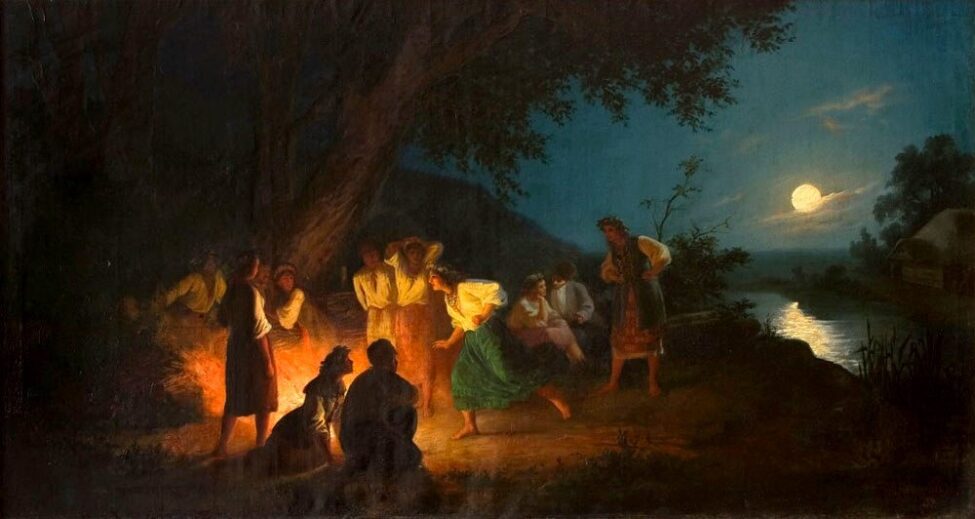
Image Credit: Night on the eve of Ivan Kupala (1892), by Henryk Siemiradzki. Lviv National Art Gallery (Public Domain)
You may find it meaningful to reflect on your own lineage and cultural inheritance as we approach the Solstice. Many of us carry ancestral relationships to seasonal rituals, symbols, prayers, or celebrations that have faded from conscious awareness over generations. To rediscover even fragments of these traditions can offer a surprising sense of continuity — a reminder that human beings across time have long sought connection with the rhythms of nature, light, and the deeper movements of the soul.
For the psychologist Carl Jung, humanity’s recurring fascination with solar symbolism reflected something archetypal within the psyche itself. The sun became a symbol of the Self — the deeper organizing center of wholeness that gradually emerges through the process Jung called individuation. Solar myths of ascent, descent, death, and rebirth appear across cultures because they mirror psychological realities unfolding within human life.
As Jung observed in Symbols of Transformation, individuation involves “changing into a figure who passes from joy to sorrow, from sorrow to joy, and like the sun, now stands high at the zenith and now is plunged into the darkest night, only to rise again in new splendor” (251).
In yogic philosophy, a similar insight appears through the language of prana, kundalini, and Atman — the radiant ground of consciousness itself. The sun is one of humanity’s oldest symbols of the Self — not because the Self is masculine, but because the sun illuminates, organizes, and gives life. In this sense, the “Inner Sun” represents not spiritual perfection, but awakened awareness embodied through the heart, psyche, nervous system, and lived experience.
Yet embedded within the Solstice itself is a quieter truth: at the very height of light, the movement toward darkness has already begun. The longest day contains within it the first subtle turning toward autumn. Psychologically, this reminds us that wholeness is not found in remaining endlessly “bright,” but in learning to hold the rhythm of opposites — expansion and descent, vitality and surrender, illumination and mystery.
Through Kundalini Yoga, breathwork, meditation, and contemplative reflection, this four-week series explores the Solar Heart as a living center of awareness, vitality, coherence, and compassion.
Weekly Arc
Week 1 — Approaching the Threshold
Preparing the body, heart, and nervous system for increased light and vitality.
Week 2 — The Solar Current
Exploring Pingala, prana, vitality, directed energy, and awakening the inner fire.
Week 3 — Portal of Light
The Summer Solstice, the heart as inner sun, Jung’s Self, Father archetype, and Atman as radiant consciousness.
Week 4 — Living the Light
Grounding, integrating, and embodying illumination in daily life.
Sundays in June
12 PM Eastern / 9 AM Pacific
Live on Zoom • Replays Available
Disclaimer:
These classes are intended for educational and experiential purposes only and are not a substitute for medical, psychological, or psychiatric care. Please consult your physician or qualified healthcare provider before beginning any new physical, breath-based, or meditative practice, particularly if you have a history of cardiovascular, respiratory, neurological, or mental health conditions.
All practices offered are invitational. Participants are encouraged to honor the wisdom and limits of their own bodies, rest as needed, and modify or discontinue any exercise that feels inappropriate or unsafe. By participating, you acknowledge personal responsibility for your physical, emotional, and psychological well-being.
This series draws from a range of symbolic, psychological, contemplative, and spiritual traditions, including Kundalini Yoga, Jungian psychology, mythology, seasonal ritual, and comparative mysticism. References to archetypes, consciousness, energy, subtle anatomy, or spiritual symbolism are presented as contemplative and educational frameworks for reflection and personal exploration.
While Kundalini Yoga has been popularized in the West through various lineages, including that of Yogi Bhajan, I do not endorse or condone the harmful actions and abuses he has been accused of. My teaching is informed by years of study, personal practice, depth psychology, contemplative traditions, and a deep respect for the timeless wisdom that transcends any one individual or organization.
The psychological and mythological material presented throughout this series is inspired in part by the work of Carl Jung and related depth psychological traditions. Such material is offered for educational and reflective purposes and should not be understood as psychotherapy or psychological treatment.
Participation in this series constitutes acceptance of full responsibility for one’s own experience and well-being.